Do you tiptoe or you want to leave a footprint on the world?
We invite you to participate in a cultural, sustainable, ecological and social project where you can leave your stamp:
THE WAY OF THE HOLY GRAIL
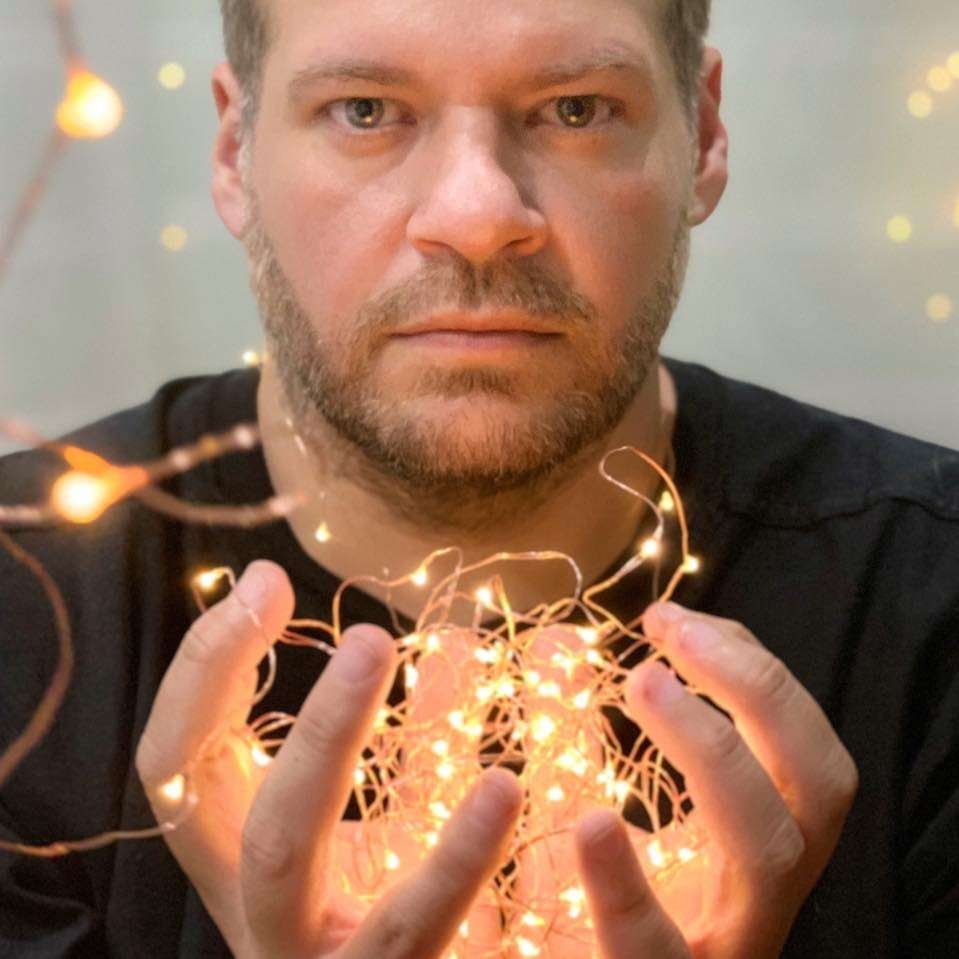
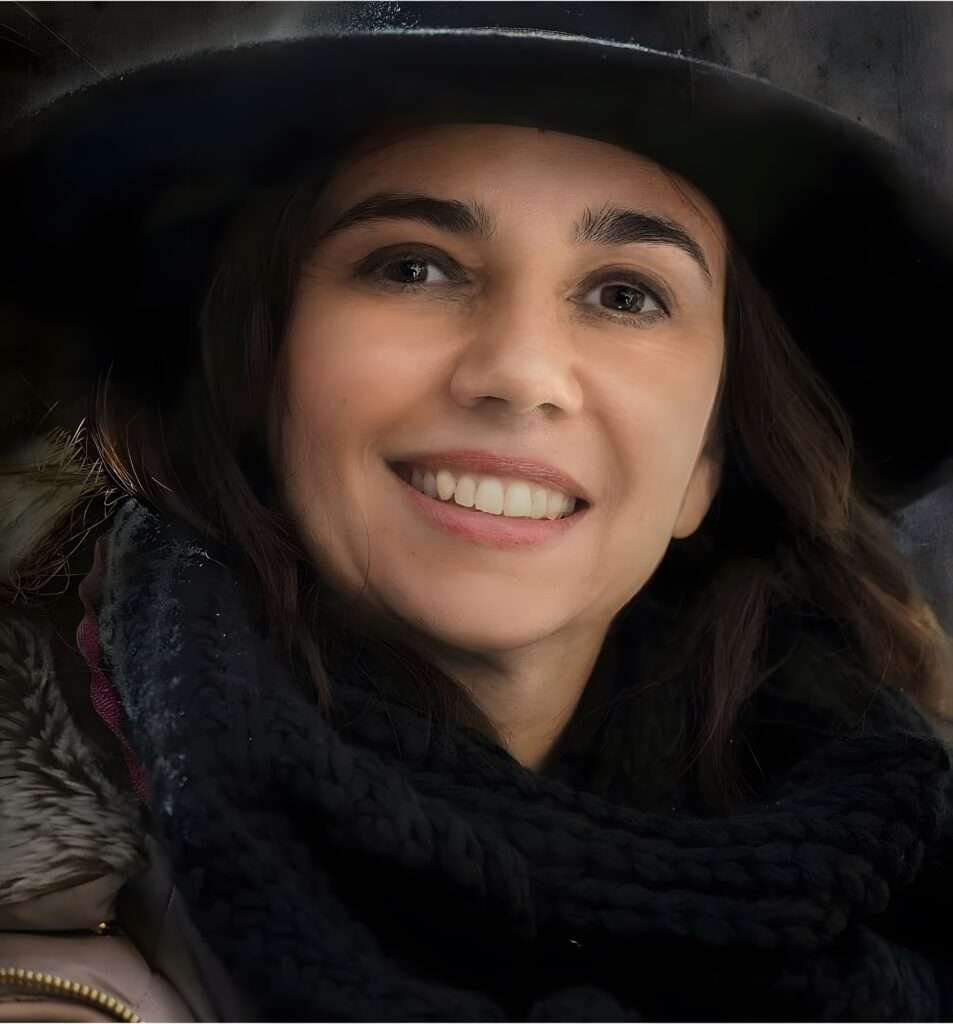
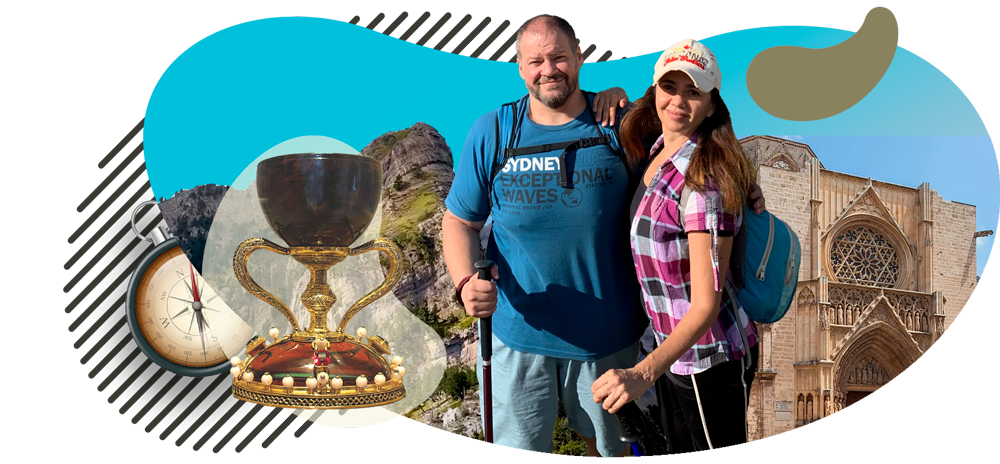
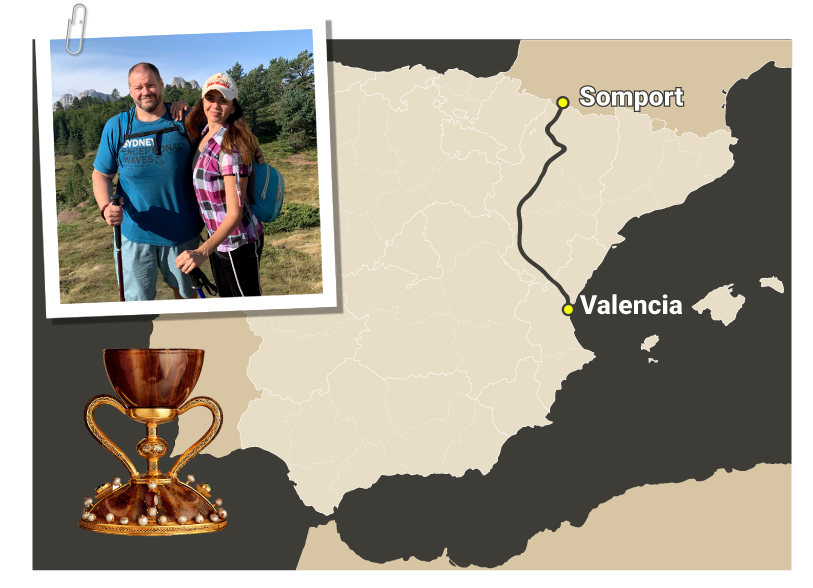
Hello! We are Alex and Cristina:
Content creators and now also Pilgrims & Ambassadors of the Way of the Holy Grail, a new pilgrimage route that follows the footprints of the most famous relic of Christendom.
We are referring, indeed, to the Holy Grail: the Chalice used by Jesus at the Last Supper.
What is the goal of this project?
Here you can watch the first 2 episodes of our adventure.
You can do it by sponsoring us:
1 km, 5 km, 20 km or as many km as your generosity allows you.
If you give us a few more minutes, we will tell you why we are so excited about this Camino.
What is the Way of the Holy Grail?
It is a new pilgrimage route that runs from Somport to Valencia; more than 650 km, crossing charming towns and villages of Aragon and the Valencian Community, many of them belonging to what it’s called “the emptied Spain”, that can be revitalized with this tourist project.
Why is the Valencian Chalice believed to be the real one?
The latest research corroborates that the Valencia Chalice is an authentic Kosh Kidush (Hebrew vessel used at Passover) contemporary to the time of Christ. Its volume, material and characteristics coincide with the most ancient paleochristian frescoes found in the catacombs of Rome.
Archaeological, documentary and historical data led Pope Francis to grant Valencia the status of Jubilee City in perpetuity in 2015, making it one of the world’s holy cities.
What does the legend say?
The oral tradition says that St. Peter fled Jerusalem taking with him the Holy Grail, which would be used in clandestine masses held in private homes.
In the 3rd century, when the Roman Empire was bankrupt, Emperor Valerian issued an edict to confiscate the church’s assets. At the last moment, the Holy Grail escapes the Roman plundering thanks to the intervention of San Lorenzo, a brave Spaniard from Huesca, in charge of guarding the treasures of the church.
San Lorenzo manages to send the chalice to Loreto (Huesca) where his parents live. There it began to be venerated as a relic.
With the Muslim invasion, the chalice is hidden in unknown hermitages, caves and hidden places until we have evidence of it again in the XI-XII centuries. At this time the first Arthurian novels were written, where the Holy Grail is mentioned for the first time.
After 3 centuries guarded by the monks of San Juan de la Peña, the Holy Chalice passed to the Aragonese monarchy, which in the 15th century decided to move the capital of the kingdom to Valencia, taking with it the court and all its valuable belongings, including the royal reliquary.
Since then, the Holy Chalice has been in Valencia and has been venerated in public since the beginning of the 20th century.
If you want to read the extended version of this exciting story, click here.
What benefits are generated by supporting this project?
1
Promote the local development of cities, towns and villages (especially in Empty Spain), providing local entrepreneurship with a story and a flow of pilgrims to generate tourist experiences and businesses linked to the route.
2
Transmit the benefits that a pilgrimage implies: reducing life to the minimum, contact with nature, inner silence, connection with your most sacred part or with God (if you are a believer)...
3
To value "slow", ecological and sustainable tourism. Tourism that does not harm the environment and that values the traditions, culture and heritage of local communities.
4
Create a new pilgrimage route that, together with the Santiago way, could turn Spain into a major European pilgrimage destination.
5
To make our culture known: from the Aragonese Romanesque to the Mudejar, our gastronomy, the Arthurian literature born in this territory…
How can you support us?
By becoming a “punctual or recurrent” patron of our project.
Micro-patronage is an option available to everyone for the co-responsibility of the creation of cultural, touristic and social projects. It is an innovative way to become a direct participant in the consolidation of this wonderful Pilgrimage Route.
Your collaboration will NOT go unnoticed.
Every time you support us, your name will appear in the video titles - we want your valuable footprint to be visible!